
Jul
21
2026
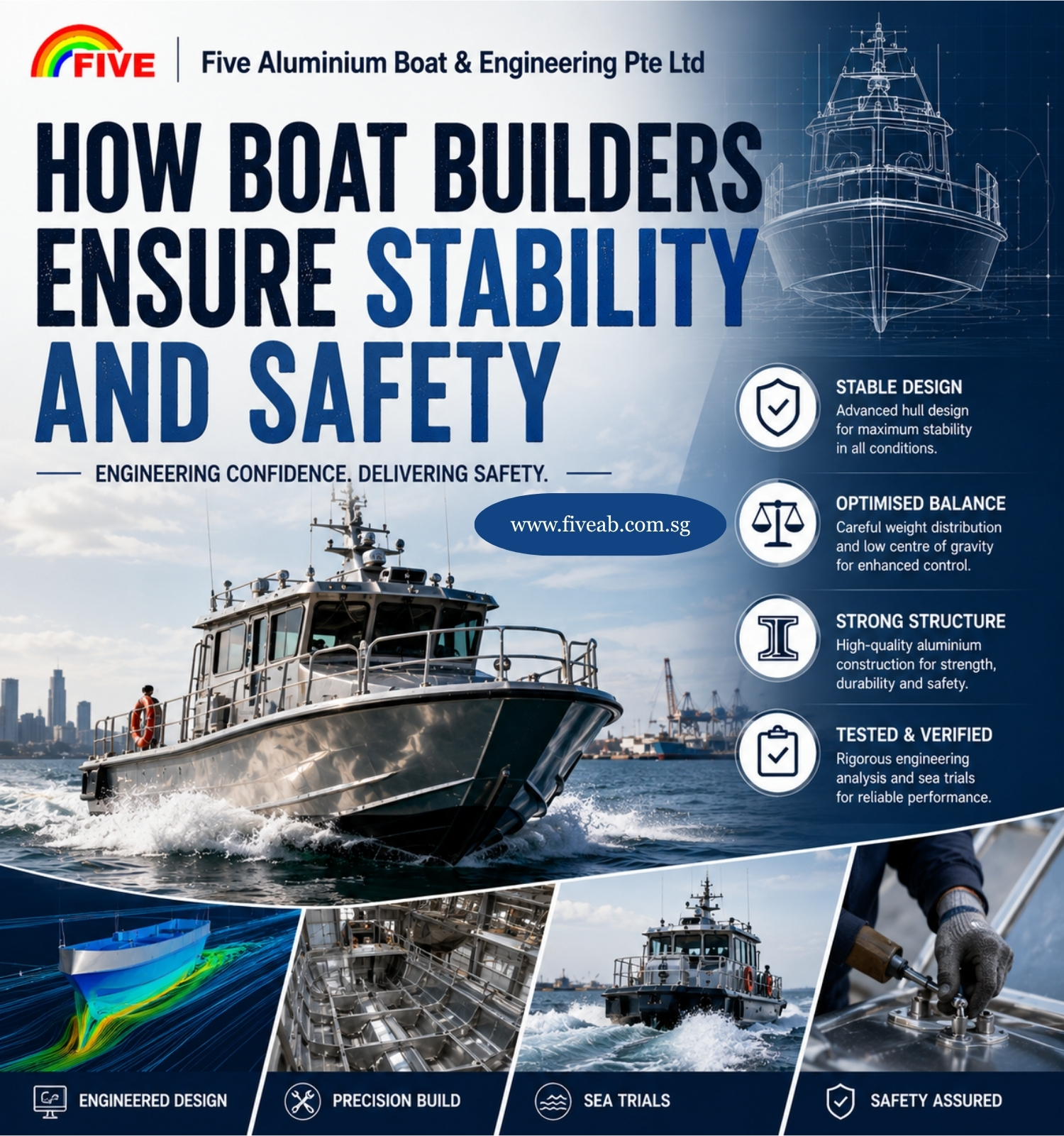
How Boat Builders Ensure Stability and Safety
Understanding Boat Stability
Boat stability refers to a vessel's ability to remain balanced and return to an upright position after being affected by external forces such as waves, wind, cargo movement, or passenger movement. A stable boat provides several important benefits:- Improved crew and passenger safety
- Better handling in rough water
- Greater operational confidence
- Reduced risk of capsizing
- Increased comfort during long operations
Hull Design: The Foundation of Stability
One of the biggest factors influencing stability is the hull design. Different commercial applications require different hull shapes. For Example:- Workboats often require wide, stable hulls that can safely carry equipment and cargo.
- Patrol boats may use deeper V-shaped hulls to provide better performance at higher speeds and in rougher seas.
- Catamarans offer exceptional stability thanks to their twin-hull configuration, making them ideal for passenger transport and environmental operations.
- Fireboats and rescue vessels are designed to remain stable even when operating powerful water monitors or carrying heavy emergency equipment.
Weight Distribution Matters
Even a well-designed hull can become unstable if weight is not distributed correctly. Boat designers carefully consider the location of every major component, including:- Engines
- Fuel tanks
- Batteries
- Water tanks
- Pumps
- Generators
- Deck Equipment
- Cargo Spaces
The Importance of the Centre of Gravity
The center of gravity (CG) is the point where the boat's weight is considered to be concentrated. Keeping the center gravity as low as practical generally improves stability by reducing the tendency of the vessel to roll. Heavy equipment is often positioned strategically within the vessel to help achieve this balance while still meeting operational requirements. Although every boat has unique design constraints, controlling the center of gravity is one of the most important aspects of marine engineering.Beam Width and Stability
Beam refers to the width of a boat. In general, the wider beam provides greater initial stability because it increases the vessel's resistance to rolling. This is one reason many commercial workboats and passenger vessels feature relatively wide hull designs. However, increasing beam also affects:- Speed
- Hydrodynamic efficiency
- Maneuverability
- Berthing requirements
Structural Strength Supports Safety
Safety is not only about keeping the boat upright-it also depends on structural integrity. Commercial aluminium boats are designed with carefully engineered structural components such as:- Frames
- Longitudinals (stringers)
- Bulkheads
- Deck supports
- Reinforced transoms
Load Capacity and Safe Operations
Every commercial boat is designed to operate within specific loading limits: These limits consider:- Crew
- Passengers
- Fuel
- Water
- Equipment
- Cargo
Safety Begins Before Construction
Long before the first aluminium plate is cut, engineers use design calculations and computer modelling to evaluate the vessel's expected performance. Depending on the project, the design process may include:- Hull form development
- Weight estimation
- Stability analysis
- Structural calculations
- Equipment arrangement
- Compliance with relevant standard and regulations
Sea Trials: Putting Design to the Test
Before a new commercial vessel is delivered, it typically undergoes sea trials to verify that the design performs as intended. During sea trials, builders and owners may evaluate:- Handling characteristics
- Turning performance
- Acceleration
- Braking response
- Stability under different operating conditions
- Engine and propulsion performance
- Steering systems
- Navigation and safety equipment
Stability Is About More Than One Feature
There is no single component that makes a boat stable or safe. Instead, stability results from the careful integration of many engineering decisions, including:- Hull design
- Beam width
- Weight distribution
- Centre of gravity
- Structural strength
- Propulsion arrangement
- Operational requirements