
Jun
02
2026
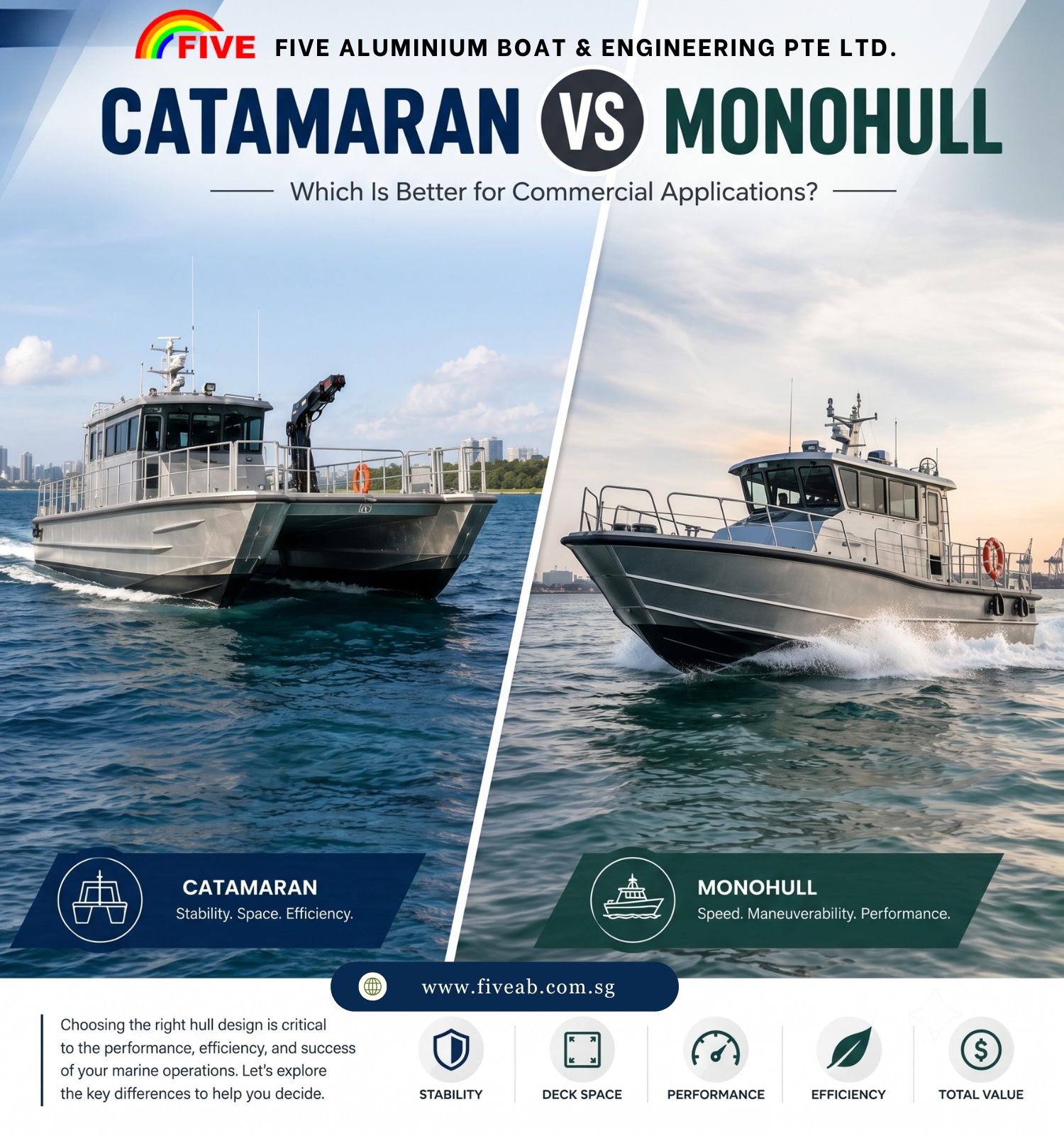
Catamaran vs Monohull: Which Hull Design Is Best for Commercial Boats?
What Is a Monohull?
A monohull vessel features a single hull running along the centerline of the boat. It is the traditional boat design used across most commercial and recreational vessels worldwide. Monohulls are commonly found in:- Patrol boats
- Rescue boats
- Fishing vessels
- Fast crew transfer vessels
- Utility workboats
- Offshore support vessels
What Is a Catamaran?
A catamaran consists of two parallel hulls connected by a deck structure. This design creates a wider beam and significantly increases stability compared to a traditional monohull. Catamarans are increasingly popular for:- Passenger ferries
- Environmental cleanup vessels
- Survey boats
- Aquaculture support boats
- Solar farm maintenance boats
- Tourism vessels
Stability: Catamaran Takes the Lead
One of the most noticeable differences between the two designs is stability. The wide stance of a catamaran significantly reduces rolling motion, creating a more comfortable experience for crew and passengers. This makes catamarans ideal for operations that require personnel to work on deck for extended periods. For activities such as:- Waterway cleaning
- Waste collection
- Environmental monitoring
- Passenger transport
- Survey operations
Speed and Performance: Monohull Excels
When speed and maneuverability are priorities, monohulls often have the advantage. Because of their narrower beam and lighter structural requirements, monohulls can achieve higher speeds with less complexity. They also tend to perform better in aggressive maneuvering situations. This is why many patrol boats, rescue vessels, and fast response craft continue to use monohull designs. For missions requiring:- Rapid deployment
- High-speed interception
- Emergency responseFast crew transportation
Deck Space: More Room with a Catamaran
The twin-hull design creates a wider platform, resulting in substantially more usable deck area. Additional deck space is beneficial for:- Cargo handling
- Equipment storage
- Passenger seating
- Waste collection systems
- Scientific equipment
- Work platforms
Fuel Efficiency
Fuel efficiency depends on vessel size, operating speed, and hull design. At moderate speeds, catamarans can offer excellent fuel efficiency because their twin slender hulls generate less wave resistance. However, at higher speeds, a well-designed monohull may be more efficient due to lower structural weight and reduced wetted surface area. The actual fuel consumption should always be evaluated based on the vessel's intended operating profile rather than hull type alone. Winner: Depends on ApplicationShallow Water Operations
Many commercial operations take place in rivers, reservoirs, lakes, and coastal waters where shallow draft is advantageous. Catamarans often distribute their weight across two hulls, allowing them to operate with less draft while maintaining stability. This makes them particularly suitable for:- Inland waterways
- Floating solar farms
- Environmental cleanup projects
- Aquaculture facilitie
Construction and Cost
Monohulls generally require less material and simpler construction methods, making them more economical to build. Catamarans involve more complex engineering and structural connections between the two hulls, which can increase construction costs. However, the additional investment may be justified when stability, deck space, or operational efficiency are critical requirements. Winner: Monohull (Initial Cost)Which Hull Is Best for Your Application?
Monohulls generally require less material and simpler construction methods, making them more economical to build. Choose a Monohull If You Need:- High speed
- Strong offshore performance
- Lower initial investment
- Excellent maneuverability
- Patrol or rescue operations
- Superior stability
- Larger deck area
- Better passenger comfort
- Shallow draft operations
- Environmental or utility applications